Banuba SDK
- 3.3
- Rating
- 10.00K
- Installs
- Free
- Price

 Analysis by App-foxy
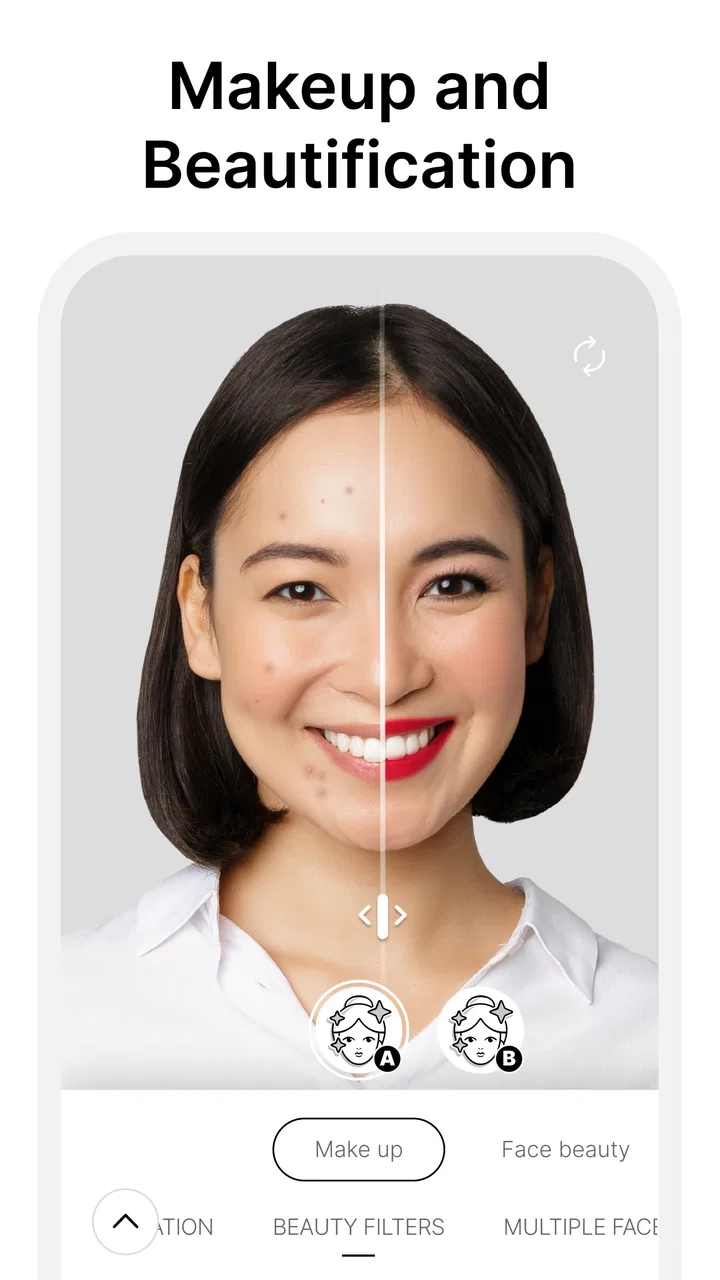
I approached Banuba SDK less like a conventional consumer app and more like a compact demonstration of what artificial intelligence can do with a camera. That distinction matters. It is listed in the Libraries & Demo category, and its purpose is to let people experience AI-driven visual effects rather than provide a complete social network, photo library, or everyday camera replacement. In my use, the appeal came from the immediacy: open the experience, look at yourself, and see how digital effects can change the image in front of you.
That makes it interesting on a shared phone or tablet. One person can try it for a few minutes, then hand the device to someone else without needing a long explanation. At the same time, I would not treat it as a household utility with separate profiles, family scheduling, or built-in coordination tools. It is a focused demo from Banuba, and the best way to judge it is by how well it shows the technology, not by expecting the organization features of a mature family app.
What the Banuba demonstration is really for
The store summary presents the app as a way to see the power of AI through distinctive visual features. In practical terms, I found that the experience is about experimentation. You are invited to observe how the camera view can be altered and how an SDK designed for augmented-reality effects might feel when placed in front of an ordinary user. The result is more useful as a hands-on sample than as a tool I would keep open all day.
You May Also Like

 AccuWeather: Weather Radar
AccuWeather Review: A Quick, Clear Forecast for Everyday Decisions
For everyday plans, the best forecast is the one you can understand quickly. AccuWeather makes rain timing, radar, and local conditions easy to act on, with a few trade-offs.

 Hill Climb Racing
Why Hill Climb Racing Still Turns Crashes Into One More Run
A tiny car, a bumpy hill and one more upgrade: Hill Climb Racing keeps resurfacing because its simple chaos makes every near-miss feel personal.

 AliExpress - Shopping App
AliExpress Makes Global Shopping Feel Personal, but Shoppers Bear the Risk
AliExpress turns a global marketplace into a pocket-sized discovery engine. Its reach is useful, its shopping loop compelling, and its trade-offs easy to miss.

 Lords Mobile: Kingdom Wars
Lords Mobile Is a Kingdom-Building Routine, Not a Quick Match
A case-by-case verdict on the building, battles, device demands, and social commitments that make Lords Mobile rewarding for some players and exhausting for others.

 PDF Scanner app - TapScanner
TapScanner Makes Paperwork Easier to Capture, Check, and Share
TapScanner makes scanning with a phone feel less like a rescue operation and more like a dependable step in getting work done. Its capture tools are useful, though not flawless.

 Block Blast!
 Shows How Much a Puzzle Game Can Leave Out
A quiet grid game shows why puzzle players increasingly value instant clarity, repeatable skill and low-pressure play—and where the genre still needs to catch up.
More From Our News Desk
View All News


That focus gives it a clear advantage over a standard camera application. A normal camera is built around taking a picture or recording a video. Banuba SDK is better understood as a window into image processing and real-time effects. If you are curious about how face-aware filters, transformations, or other AI-assisted camera ideas feel in use, this is a more direct introduction than reading a technical explanation.
It also differs from a full social camera. Social platforms usually surround their effects with accounts, feeds, messaging, sharing, and notifications. Those layers can be convenient, but they also distract from the visual technology. Here, the demonstration itself is the point. I appreciated that narrower purpose when I wanted to explore the effect rather than immediately publish something.
A realistic shared-device moment
Imagine a family sitting together after dinner with one Android phone on the table. One person wants to show a younger relative how an AI camera effect changes a face, another wants to test a different look, and someone else is simply curious about the underlying idea. Banuba SDK fits that short, informal session well. The device can pass from hand to hand, and each person can make their own judgement without needing to understand developer terminology.
The experience is especially suitable when the goal is demonstration rather than storage. A parent might use it to explain that a camera image can be modified in real time. A student interested in app development might use it as a visual starting point for thinking about augmented reality. A friend who normally ignores technical demos may still engage because the result appears directly on the screen instead of being hidden behind menus or code.
There is a trade-off, though. Shared use can become awkward if everyone expects private settings or a personal history. I would hand over the device only after checking what is visible on screen and closing anything that belongs to the previous user. That is not a special household feature; it is simply good practice with any camera-based demonstration on a shared device.
Setup expectations and practical boundaries
Banuba SDK is free, aimed at everyone, and runs on Android devices using version eight or later. That broad compatibility makes it approachable for people who want to try the demo without committing to a paid tool. The age label is also reassuring for a general household audience, although an age rating should not replace an adult’s judgement about how children use a camera-oriented app.
My recommendation is to start with the device owner present. A first launch is a good moment to see how the interface behaves, what the camera view looks like, and whether the phone handles the visual processing comfortably. Even when an app is simple, a shared-device owner should understand what is being shown before passing it around, particularly when younger users are involved.
I would also separate “free to try” from “free of every possible concern.” Free removes a purchase barrier, but it does not automatically make an app ideal for every phone, every user, or every household routine. The right question is whether the demonstration has a clear purpose for you. If you only want a conventional camera, this is probably unnecessary. If you want to explore AI effects in a direct way, the free entry point is useful.
One practical tip is to use it in a short, supervised session rather than leaving it open as a background activity on a communal phone. That keeps the purpose clear and avoids the common problem where a novelty app becomes a confusing shortcut among the owner’s regular tools. On a personal device, the boundary is simpler: try the effects, decide whether they are useful, and remove the app if the demonstration no longer has value.
How I would coordinate use in a household
Because this is not a family-management product, coordination has to happen outside the app. In my experience, the easiest arrangement is informal: one person holds the device, explains what is being tested, and gives the next user a clean starting point. That works better than assuming the app will organize different people or remember household preferences for them.
For a shared tablet, I would agree on a simple rule before starting: use the demo for experimentation, do not treat the screen as a private mirror, and ask before capturing or showing another person. These are ordinary boundaries, but they matter more with camera effects because the visual result can encourage people to focus on the novelty and forget the person in front of the lens.
Another useful workflow is to let each user choose a small goal. One person can examine how naturally an effect follows movement, another can consider whether the result would suit a creative project, and a child can simply observe the transformation with an adult nearby. This turns a brief novelty into a more thoughtful demonstration without pretending that Banuba SDK is a lesson platform.
For coordination between adults, I would not expect shared accounts, synchronized preferences, or a household dashboard. The app is much closer to a technology showcase than a collaborative workspace. If several people need separate saved projects, organized media, or reliable handoff between devices, a dedicated camera or editing application will be a better fit.
Age, trust, and the camera context
The Everyone content rating makes the app approachable for a broad audience, but the camera context still deserves attention. Children may understand that an image looks different without understanding where a camera view can be shown or who should be included. I would introduce it as a supervised visual experiment, not as permission to point a device at anyone nearby.
For younger users, the most valuable conversation is about consent and context. Ask before using another person as the subject, avoid turning a visitor into an unexpected demonstration, and stop if someone is uncomfortable. Banuba SDK can make a face-based effect entertaining, but the social boundary comes from the adults and children using it, not from the novelty of the filter.
Trust also matters on a shared device. I would avoid handing over a phone that is already displaying private notifications, personal photos, or unrelated conversations. A quick check of the screen protects everyone involved. This is particularly important when a child is taking a turn, because a visual demo can easily become an accidental tour through the owner’s other content if the device is not prepared first.
For teenagers and adults, the app can be a useful conversation starter about artificial intelligence and edited images. The effects make it obvious that a camera view is not always a neutral record of reality. That is a genuine educational advantage, even though the app itself is not a formal media-literacy course. I found the demonstration more valuable when I treated it as a prompt for questions rather than as a finished creative platform.
Strengths for curious users and creators
The strongest part of Banuba SDK is its ability to make an abstract technical idea visible. Instead of explaining that software can analyze a camera image and apply a visual response, you can watch the concept happen on the screen. That immediate feedback is helpful for beginners, designers, educators, and anyone comparing the promise of AI with the feel of an actual interactive effect.
It can also help a creator decide what kind of experience they want before investing time in a larger project. A person planning a playful camera concept can use the demo to think about timing, visual clarity, and whether an effect feels natural or distracting. This is not the same as building a product, but it is a sensible early-stage reference point.
My less obvious tip is to judge the effects while moving normally, not only while posing. A visual treatment that looks impressive in a still moment may feel less convincing when the subject turns, steps back, or changes expression. Testing those ordinary movements gives a better impression of whether the technology feels responsive enough for your intended use.
I would also compare the experience on the device where it will actually be used. A demonstration that feels smooth on one phone may not create the same impression on an older handset. Since the app is intended to showcase visual processing, responsiveness is part of the experience. If the display feels delayed or uncomfortable, that limitation may come from the device rather than from the idea itself, but it still affects whether the app is worthwhile for you.
Where it falls short compared with familiar alternatives
Compared with a standard camera, Banuba SDK offers more immediate visual experimentation but less reason to remain installed as a daily tool. A normal camera is dependable for documenting an event, photographing a receipt, or recording a family moment. I would choose the ordinary camera for those jobs because its purpose is clearer and its workflow is more familiar.
Compared with a social camera, Banuba SDK feels more focused and less cluttered by publishing features. That can be an advantage for privacy-conscious households or for anyone who wants to test an effect without entering a social feed. The downside is that users who expect built-in sharing, editing, contacts, or a personal collection may find the experience limited.
Compared with a professional augmented-reality toolkit, it is easier to approach but much less suitable for serious development work. A developer who needs documentation, integration controls, testing utilities, or production support should look for a proper development resource rather than treating this demo as a complete workspace. Its value is in showing the concept from the user’s side.
That distinction is important for families too. A child may enjoy the result, but a parent should not present it as a full creative studio. It is a small, focused experience that can inspire questions and play. If the household wants to make organized videos, edit clips, preserve memories, or collaborate on a project, another app will likely serve those needs better.
What the current app profile suggests
Banuba SDK was released on October fifteenth, two thousand eighteen, and its current version is one point two point six. I see that history as a clue to set expectations carefully: this is a long-standing demonstration rather than something I would evaluate like a constantly evolving social platform. The sensible approach is to try it on the intended device and decide whether the core experience still feels useful today.
Its average rating is 3.3 from roughly one hundred twenty ratings, with five written reviews, and the app has passed ten thousand installs. Those figures suggest a modest audience and a mixed reception rather than a universally essential tool. I would not use the rating alone to dismiss it, because demo apps can appeal strongly to a narrow group while disappointing people who expect a complete camera product.
The developer is Banuba, which gives the app a clear connection to camera and AI experimentation. Still, the name of the developer should not lead users to assume that every product need is covered here. The relevant question is whether this particular SDK demo lets you understand or enjoy the visual effects it presents.
Who should install it and who should skip it
I would recommend trying it if you are curious about AI camera effects, want a hands-on example for a discussion about augmented reality, or need a quick way to show a household member how real-time image changes can work. It is also worth a look for an aspiring creator who wants to think through the feel of an effect before choosing a more advanced tool.
I would skip it if your main goal is dependable photography, organized family media, private multi-user profiles, or a complete editing workflow. It is not the right answer for someone who wants a camera replacement with a long list of practical utilities. A regular camera, a dedicated editor, or a family-oriented media service will be more useful in those situations.
For shared use, my advice is simple: install it on the device owner’s terms, test it together, and keep the session supervised when children or guests are involved. Do not confuse the Everyone label with a promise that every situation is automatically appropriate. The app can be harmless fun and a good visual teaching aid, but responsible use still depends on consent, attention, and sensible device handoff.
My household verdict
I enjoyed Banuba SDK most when I treated it as a guided glimpse into the possibilities of AI-powered camera experiences. It is easy to explain to a friend, interesting to pass around for a short demonstration, and different enough from a normal camera to justify a trial. The free price and Android compatibility from version eight onward make that trial relatively accessible.
Its limitations are just as clear. It does not replace a camera, a social platform, a family organizer, or a professional development environment. Shared-device users need to provide their own boundaries, and parents should remain involved when children are experimenting with camera-based effects. The modest rating also supports a measured recommendation rather than an enthusiastic claim that everyone needs it.
My final view is that Banuba SDK is best for curiosity, demonstration, and early creative exploration. I would install it for a short household session, use it to spark a conversation about edited images and AI, and then decide whether it has a lasting role on the device. If you want a focused look at what Banuba’s technology can feel like from the user’s side, it is worth trying. If you need a polished everyday camera or a coordinated family tool, I would choose something built specifically for that job.
FAQs for Banuba SDK
01What is Banuba SDK and how can it be used in my app?
Banuba SDK is a powerful toolkit designed to integrate augmented reality (AR) features into mobile applications. It offers a range of capabilities like face tracking, virtual try-ons, and AR masks. Developers can use it to enhance user engagement by adding interactive experiences without needing extensive AR expertise.
02Is Banuba SDK compatible with both Android and iOS platforms?
Yes, Banuba SDK is designed to be compatible with both Android and iOS platforms. This cross-platform compatibility ensures that developers can reach a wider audience by easily implementing AR features in apps available on both Google Play Store and Apple App Store.
03What are the system requirements for integrating Banuba SDK?
Integrating Banuba SDK requires an IDE like Android Studio for Android or Xcode for iOS. The SDK supports Android 5.0+ and iOS 11.0+. Ensure your development environment is up-to-date and capable of handling AR functionalities to optimize the app's performance.
04How does Banuba SDK ensure user privacy and data security?
Banuba SDK is committed to maintaining user privacy and data security. It processes AR effects on-device, meaning personal data doesn't leave the user's device. It follows industry-standard security practices, ensuring that user data is protected and remains confidential.
05What kind of support and documentation does Banuba SDK provide?
Banuba SDK offers comprehensive support and documentation, including detailed guides, API references, and integration tutorials. Developers have access to a support team for technical assistance, ensuring a smooth integration process. Additionally, a community forum is available for sharing solutions and insights.
Pros
- Easy integration with various platforms.
- Wide range of AR effects available.
- Regular updates with new features.
- High performance and low latency.
- Comprehensive documentation support.
Cons
- Requires a subscription for full features.
- Limited offline functionality.
- Initial setup can be complex.
- May not support all device models.
- High battery consumption during use.

Banuba SDK
Gallery